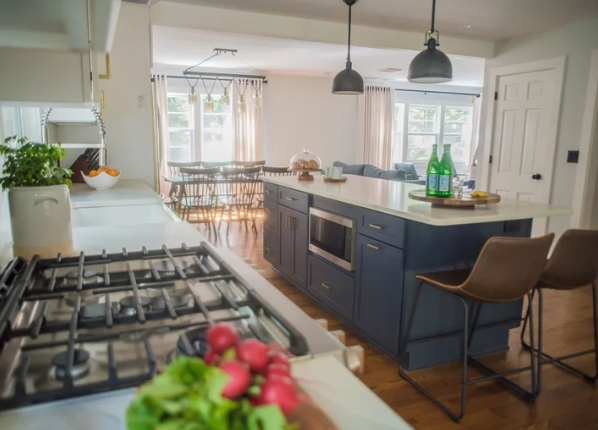
An open-concept farmhouse dining room should feel connected to the kitchen and living room while still having a clear identity of its own. Because there are fewer walls in an open floor plan, furniture placement, lighting, rugs, and materials become especially important for defining the dining area.
The best Open-Concept Farmhouse Dining Room Ideas combine comfort, practicality, and visual continuity. A well-planned dining space should be easy to move through, large enough for everyday meals and gatherings, and coordinated with the surrounding rooms without looking overly matched.
Choose the Right Position for the Dining Area
In many open farmhouse layouts, the dining area works best between the kitchen and living room.
This creates a natural transition from food preparation to eating and relaxing.
The dining table should be close enough to the kitchen for convenient serving but far enough away that chairs do not interfere with cooking or circulation around the island.
Leave clear walkways on all sides of the table.
If the room opens directly to a patio or covered porch, positioning the dining area near exterior doors can also make outdoor entertaining easier.
Use a Farmhouse Table as the Main Anchor
The dining table is usually the strongest visual feature in the room.
A long rectangular wood table works especially well in farmhouse interiors because it creates a relaxed and communal atmosphere.
Natural wood tones introduce warmth and help connect the dining area with other wood elements in the kitchen or living room.
For a more modern farmhouse look, choose a table with a simple shape rather than highly distressed or ornate detailing.
Round tables can also work well in smaller open spaces because they improve circulation and soften the straight lines often found in kitchens and cabinetry.
Define the Dining Zone With Lighting
Lighting is one of the easiest ways to establish a dining area without adding walls.
Place a chandelier or pendant fixture directly above the table.
The fixture visually marks the dining zone and helps separate it from the kitchen and living areas.
For farmhouse interiors, suitable materials include black metal, aged brass, clear glass, wood, or simple fabric shades.
The fixture should be proportional to the table. A very small light above a large table can feel disconnected, while an oversized chandelier may overwhelm a compact space.
Lighting should coordinate with nearby kitchen pendants without necessarily matching them exactly.
Add an Area Rug Under the Table
A rug can help define the dining area within a larger open floor plan.
Choose one large enough for the dining chairs to remain on the rug even when they are pulled away from the table.
This creates a more finished appearance and visually anchors the furniture.
Neutral rugs with subtle patterns often work well in farmhouse interiors.
Flatweave or low-pile rugs are practical choices because chairs can move across them more easily.
If the kitchen and living room also contain rugs, choose designs that share similar colors or textures so the open space feels coordinated.
Coordinate the Dining Room With the Kitchen
A successful open dining area should feel related to the kitchen.
Repeat a few materials, colors, or finishes between the two spaces.
For example, a wood dining table can coordinate with kitchen island stools or open shelving.
Black dining chair frames may relate to black cabinet hardware or pendant lights.
A warm white kitchen can connect with cream upholstery or light-colored walls in the dining area.
These small repetitions help create continuity without making the dining room look like an extension of the kitchen cabinetry.
Mix Dining Chairs for a Relaxed Look
Farmhouse dining rooms do not always need identical chairs.
Mixing seating can create a more casual and collected appearance.
For example, use simple wood chairs along the sides of the table and upholstered chairs at each end.
A dining bench can also replace chairs on one side.
This works particularly well in family-oriented spaces because benches can accommodate several people while keeping the layout visually open.
Avoid combining too many unrelated styles. The seating should share at least one common element, such as color, material, or general shape.
Add a Sideboard for Storage
Open-concept rooms can quickly appear cluttered because many surfaces are visible at once.
A sideboard or buffet can provide useful dining storage while also defining the edge of the room.
Use it to store dishes, table linens, serving pieces, or glassware.
The top can hold a few decorative items such as a lamp, ceramic vase, artwork, or simple greenery.
Choose a sideboard that complements the dining table without matching it exactly.
A painted cabinet can add contrast to a wood table, while natural wood can introduce warmth into a lighter interior.
Keep the Color Palette Consistent
Open-concept dining spaces benefit from a coordinated color palette.
Warm white, cream, beige, taupe, soft gray, muted green, and natural wood tones are common choices.
Darker accents such as black, charcoal, or deep brown can add definition.
Repeat colors from the kitchen or living room in smaller ways.
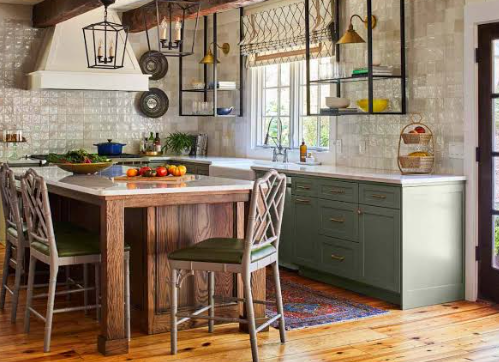
For example, green kitchen cabinetry might be echoed through dining chair cushions, artwork, or decorative ceramics.
Consistency helps the entire open floor plan feel intentional.
Use Architectural Features to Create Character
Architectural details can help distinguish the dining area.
Exposed ceiling beams can visually frame the space from above.
A paneled wall or subtle shiplap treatment can create a backdrop without physically closing off the room.
Large windows can also become part of the dining design, especially when the table is positioned to take advantage of natural light or outdoor views.
In modern farmhouse interiors, architectural details work best when used selectively.
Too many rustic features can make the room feel heavily themed.
Bring in Natural Materials
Natural materials are an important part of farmhouse design.
Wood is an obvious choice, but it can be complemented by linen, cotton, leather, woven fibers, stone, and ceramic.
A wood dining table can be paired with linen seat cushions or woven chairs.
A ceramic bowl or stone vase can provide simple decoration.
Woven baskets can add storage without introducing more hard surfaces.
These materials create warmth and texture while helping the room feel comfortable rather than formal.
Keep the Table Decor Simple
Dining table decor should not interfere with everyday use.
Instead of filling the table with multiple decorative objects, use one simple centerpiece.
A ceramic vase with branches, a wooden bowl, or a small arrangement of greenery may be enough.
For longer tables, two or three low objects can create balance without blocking conversation.
Seasonal decor can also be added in small amounts.
The goal is to keep the dining table attractive while still making it easy to use for meals.
Improve Natural Light
Natural light can make an open dining room feel larger and more inviting.
Position the table near windows when the floor plan allows.
Avoid blocking major windows with tall cabinets or oversized decorative furniture.
Light curtains or woven shades can provide privacy while maintaining brightness.
If the dining room connects to exterior doors, glass panels can increase daylight and strengthen the relationship between indoor and outdoor spaces.
Natural light also highlights wood grain and textured materials commonly used in farmhouse design.
Use a Bench in Smaller Spaces
A dining bench is particularly useful in compact open layouts.
It can fit closer to a wall than individual chairs and may allow more people to sit at the table.
Built-in benches can also provide hidden storage.
Place a bench on the side of the table that faces a wall or lower-traffic area.
This keeps the opposite side easier to access with chairs.
For added comfort, use removable cushions in simple neutral fabrics.
Maintain Clear Circulation
Good circulation is essential in an Open-Concept Farmhouse Dining Room.
Dining chairs should not block pathways between the kitchen and living room.
Leave enough room behind chairs for people to sit down and move around comfortably.
If the dining table is close to a kitchen island, make sure both areas can be used at the same time.
In narrow spaces, a smaller table may function better than an oversized farmhouse table.
The room should feel generous and easy to use rather than crowded.
Balance Farmhouse and Modern Elements
A contemporary farmhouse dining room usually looks best when rustic materials are balanced with cleaner details.
A traditional wood table can be paired with streamlined chairs.
Exposed beams can sit above a modern pendant fixture.
A vintage-style sideboard can work against simple neutral walls.
This contrast creates a more flexible interior and prevents the farmhouse style from feeling overly decorative.
Focus on a few strong farmhouse elements instead of using rustic accessories on every surface.
Create a Dining Area That Feels Connected
The best Open-Concept Farmhouse Dining Room Ideas create a distinct eating area without interrupting the flow of the larger open floor plan.
A farmhouse table can anchor the space, while a pendant light and area rug help define its boundaries. Repeated materials and colors connect the dining room with the kitchen and living area.
Practical storage, clear circulation, natural light, and comfortable seating make the room easier to use every day.
The goal is to create a dining space that feels warm and recognizable as its own zone while still belonging naturally within the rest of the open-concept home.