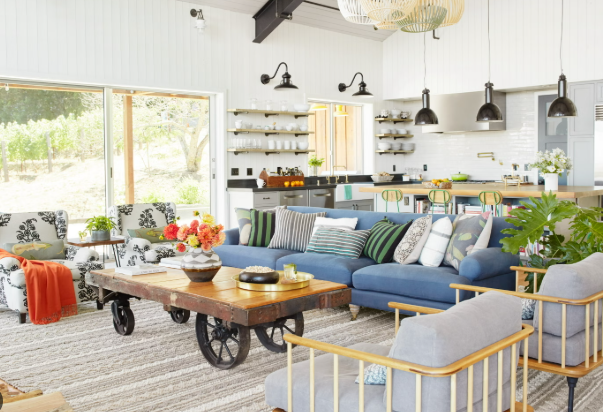
An open-concept farmhouse great room brings several important living areas together in one connected space. Instead of separating the living room, dining room, and kitchen with walls, the great room creates a more open layout that encourages conversation, movement, and shared family activities.
The best Open-Concept Farmhouse Great Room Ideas combine spaciousness with clear visual organization. Although the room may function as one large area, each zone should still have a purpose. Furniture placement, lighting, rugs, materials, and architectural details can help define separate areas while maintaining a consistent farmhouse style.
Create Clear Zones Within the Great Room
An open floor plan should feel connected without becoming visually confusing.
Divide the great room into functional zones such as:
- Living area
- Dining area
- Kitchen
- Reading corner
- Conversation area
- Entry transition
Furniture placement is one of the easiest ways to create these zones.
For example, a sofa can face the fireplace and define the living area, while a dining table placed behind it creates a separate eating zone.
A kitchen island can establish a natural boundary between cooking and living spaces without blocking views.
Make the Fireplace a Central Feature
A fireplace is often one of the strongest elements in a farmhouse great room.
Positioning it on a main wall gives the room a natural focal point and can help organize the furniture around it.
Stone, brick, painted masonry, or simple plaster finishes can all work with farmhouse interiors.
A substantial wood mantel can add warmth and texture.
Keep the surrounding decor relatively simple so the fireplace remains visually important.
If the room has high ceilings, a fireplace that extends vertically toward the ceiling can help balance the scale of the space.
Use Exposed Ceiling Beams
Exposed beams are a classic feature in farmhouse interiors and work particularly well in large open rooms.
They add architectural structure to a space that might otherwise feel too expansive.
Natural wood beams introduce warmth, while painted beams can create a cleaner or more contemporary farmhouse appearance.
Beams can also visually connect different functional areas.
For example, running beams across the living, dining, and kitchen zones can make the entire great room feel like one coordinated space.
Choose a Large Comfortable Sofa
The living area usually needs substantial furniture to match the scale of a great room.
A sectional sofa can help anchor the seating area and provide enough space for family members and guests.
Traditional sofas combined with armchairs can also work well.
Choose upholstery in practical neutral colors such as cream, beige, gray, taupe, or warm brown.
Textured fabrics can make the room feel softer and more comfortable.
Avoid pushing all furniture against the walls. Bringing seating closer together often creates a more inviting conversation area.
Define the Living Area With a Rug
An area rug helps visually separate the living space from the rest of the great room.
Choose a rug large enough to sit beneath the front legs of the sofa and surrounding chairs.
This makes the furniture feel connected rather than scattered.
Neutral patterns, faded vintage-style rugs, woven textures, and subtle geometric designs all work well in farmhouse spaces.
The rug can also introduce color without overwhelming the room.
If the dining area has another rug, coordinate the colors rather than choosing identical designs.
Connect the Kitchen and Living Room
The kitchen is often highly visible in an open-concept farmhouse great room, so its materials should coordinate with the surrounding space.
Repeat selected finishes across the room.
For example, wood from the kitchen island may appear again in the dining table or fireplace mantel.
Black cabinet hardware may coordinate with light fixtures or furniture frames.
White or cream cabinetry can connect naturally with neutral upholstery.
The goal is not to make every finish identical, but to repeat enough elements that the entire room feels intentional.
Use a Large Kitchen Island
A large island is especially useful in an open farmhouse layout.
It provides workspace, storage, casual seating, and a visual transition between the kitchen and great room.
Counter stools can turn the island into a convenient place for breakfast, conversation, or informal meals.
For contrast, consider using a different island color from the perimeter cabinets.
Natural wood, muted green, navy, charcoal, or warm gray can work well with farmhouse interiors.
Pendant lighting above the island can further define the kitchen zone.
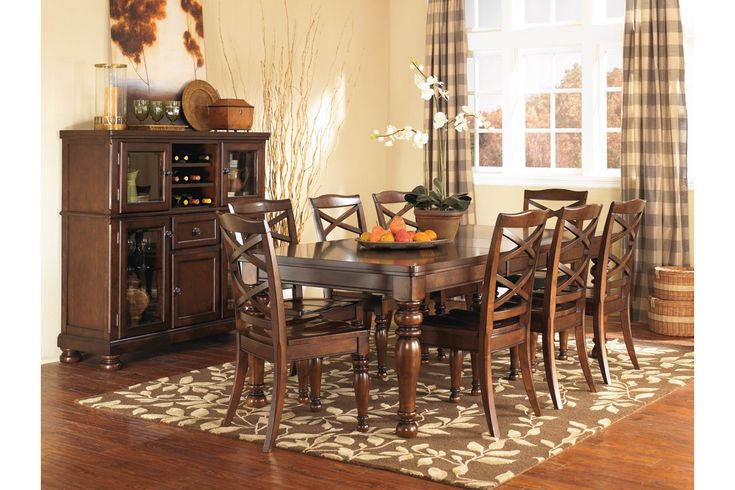
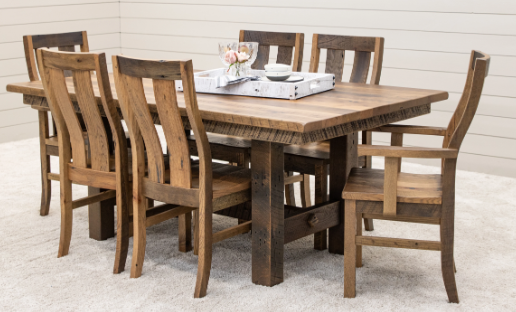
Add a Farmhouse Dining Table
A substantial dining table works naturally in an open great room.
Rectangular wood tables are popular because they create a communal atmosphere and suit larger spaces.
Place the dining area between the kitchen and living room when possible.
This provides an easy transition between cooking, eating, and relaxing.
Use a chandelier or pendant fixture above the table to visually define the dining zone.
Benches can create a relaxed farmhouse look, while upholstered end chairs add comfort and contrast.
Keep the Color Palette Consistent
A unified color palette is especially important in an open floor plan because several functional areas are visible at the same time.
Warm neutrals work well as the base.
Consider:
- Warm white
- Cream
- Beige
- Taupe
- Soft gray
- Natural wood
- Muted green
Darker accents such as black, charcoal, deep brown, or navy can provide contrast.
Repeat these colors across furniture, textiles, cabinetry, artwork, and accessories.
This creates continuity without making every area look identical.
Bring in Natural Wood
Natural wood is one of the most effective materials for creating a farmhouse atmosphere.
Use it in ceiling beams, dining tables, coffee tables, shelving, flooring, or decorative details.
Mixing wood tones can make the room feel more natural and collected.
For example, lighter oak flooring can work with a darker dining table and medium-toned ceiling beams.
Avoid trying to match every wood finish perfectly.
Slight variation often creates more depth.
Add Layered Lighting
A large open room requires more than one light source.
Layer different types of lighting throughout the space.
Use pendant lights above the kitchen island, a chandelier above the dining table, and floor or table lamps in the living area.
Wall sconces can also highlight architectural features or provide softer evening lighting.
Different fixtures can have slightly different designs while sharing a common finish such as black metal, aged brass, or wood.
This helps each zone feel distinct while maintaining visual consistency.
Make High Ceilings Feel Comfortable
Great rooms often have vaulted or double-height ceilings.
While these ceilings create spaciousness, they can sometimes make the room feel less intimate.
Large-scale elements can help balance the proportions.
Consider:
- Oversized pendant lights
- Tall curtains
- Large artwork
- Floor-to-ceiling fireplaces
- Exposed beams
- Tall bookcases
These features fill vertical space and help visually connect the ceiling with the furniture below.
Avoid using very small decorative items in an oversized room, since they can appear insignificant.
Use Large Windows for Natural Connection
Large windows are common in farmhouse great rooms and help connect the interior with outdoor surroundings.
Keep window treatments relatively simple.
Floor-length curtains can soften the room while maintaining the height of the windows.
Woven shades can introduce additional texture.
If privacy is not a major concern, avoid covering windows with heavy treatments that reduce natural light.
Position seating to take advantage of outdoor views when possible.
Add Built-In Storage
Because open spaces expose more of the room at once, storage is especially important.
Built-in cabinets, shelves, and media units can keep everyday items organized.
Consider installing cabinetry around the fireplace or along a side wall.
Closed storage is useful for hiding electronics, games, toys, and household items.
Open shelves can display a smaller collection of books, ceramics, framed photographs, and decorative objects.
Keep shelf styling relatively simple to prevent the room from feeling cluttered.
Introduce Farmhouse Texture
Texture helps prevent a neutral great room from feeling flat.
Combine different materials such as:
- Linen
- Cotton
- Wool
- Leather
- Wood
- Stone
- Woven fibers
- Ceramics
A linen sofa can be paired with wool throws, woven baskets, and a wooden coffee table.
Leather chairs can introduce contrast.
Stone or brick around the fireplace can add architectural texture.
The materials should feel natural and comfortable rather than overly decorative.
Include a Reading or Conversation Corner
Large great rooms often contain unused corners.
These areas can become small secondary seating zones.
Place two armchairs near a window with a side table between them.
A floor lamp can turn the area into a reading corner.
This helps use the entire room while creating smaller, more intimate spaces within the open layout.
It can also keep the main seating area from becoming overcrowded.
Keep Decor Simple and Balanced
Farmhouse interiors can quickly become overly themed if every surface contains rustic accessories.
Instead, choose a limited number of meaningful decorative items.
Large pottery, simple greenery, framed artwork, books, baskets, and neutral textiles are often enough.
Allow some surfaces to remain open.
This is particularly important in a large open room, where too many small decorative objects can create visual clutter.
Use scale carefully. Larger accessories generally work better than many tiny pieces.
Maintain Easy Circulation
One of the most important parts of an open-concept great room is movement.
Leave clear pathways between the kitchen, dining area, living space, and exterior doors.
Avoid placing furniture where it blocks major circulation routes.
Allow enough space behind dining chairs and around the kitchen island.
In the living area, position coffee tables and side tables so people can move comfortably between seats.
A spacious room should feel open not only visually but also physically.
Balance Traditional and Modern Farmhouse Style
A successful farmhouse great room does not need to look entirely rustic.
Combining traditional materials with modern shapes can create a more timeless interior.
For example, exposed wood beams can be paired with streamlined sofas.
A rustic dining table can sit beneath a simple contemporary chandelier.
Traditional stone fireplaces can work with modern black-framed windows.
This balance keeps the room from feeling too themed while preserving farmhouse character.
Create a Great Room That Feels Unified
The most effective Open-Concept Farmhouse Great Room Ideas balance openness with structure.
Use furniture, lighting, rugs, and architectural features to create distinct zones for cooking, dining, and relaxing. Repeat selected colors and materials throughout the room so each area feels connected.
A fireplace, wood beams, natural textures, comfortable seating, and practical storage can add farmhouse character without overwhelming the space.
When the layout is carefully planned, an open-concept farmhouse great room can feel spacious, warm, functional, and naturally suited to everyday family life.