Open-concept interiors remain popular because they create a sense of space, improve natural light, and make it easier for different areas of the home to connect visually. When combined with farmhouse design, the result is often warm, practical, and comfortable rather than overly formal.
The best Open-Concept Farmhouse Layout Ideas bring the kitchen, dining area, and living room together while still giving each zone a clear purpose. The goal is not to create one large empty room, but to organize the space so that every area feels connected without losing its own identity.
Start With a Clear Open Floor Plan
A successful open-concept farmhouse begins with a logical floor plan.
The kitchen, dining room, and living area should feel connected, but circulation between them must remain easy. Avoid placing oversized furniture in major walkways or creating narrow paths between zones.
In many farmhouse layouts, the kitchen works well at one end of the open space, the dining area sits in the middle, and the living room occupies the opposite side. This creates a natural sequence between cooking, dining, and relaxing.
The arrangement can also work around a central feature such as a fireplace, kitchen island, or large set of windows.
Use the Kitchen Island as a Central Anchor
A large kitchen island is one of the most useful features in an open farmhouse layout.
It can define the kitchen boundary without using walls and provide additional workspace, seating, and storage. In family homes, the island may also become a casual breakfast area, homework station, or gathering point.
Position the island so that it faces the dining or living area. This allows people preparing food to remain connected with others in the room.
A farmhouse-style island may include wood details, painted cabinetry, stone countertops, or simple bar stools. The design should coordinate with the surrounding rooms rather than appearing like a separate element.
Define the Living Room With Furniture
Furniture placement is especially important in open spaces.
Instead of pushing every sofa and chair against the walls, use furniture to create a clear living zone.
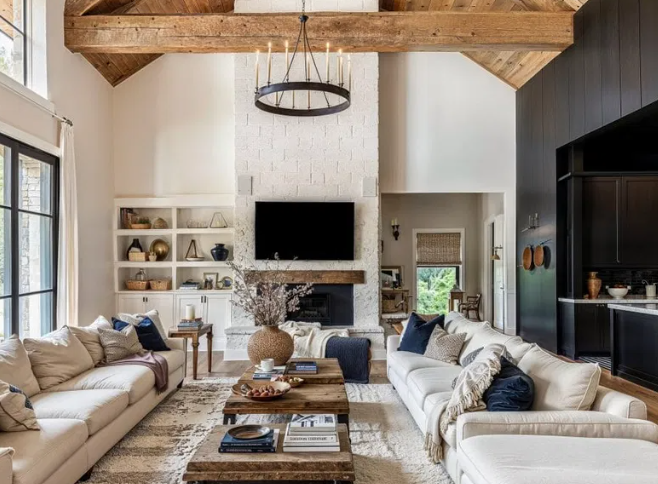
A large sofa can help establish the boundary between the living room and dining area. A sectional works particularly well in larger farmhouse interiors because it naturally defines the seating space.
Arrange chairs around a coffee table or fireplace to create a conversation area. If the room includes a television, try to balance it with other visual features so it does not dominate the entire open-plan space.
One of the most practical Open-Concept Farmhouse Layout Ideas is to use furniture placement as an invisible room divider.
Create a Distinct Dining Area
An open dining area should feel connected to the kitchen while still looking intentional.
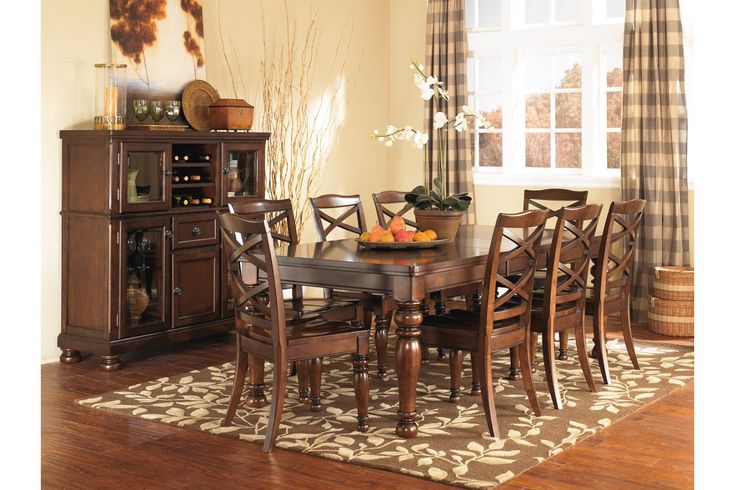
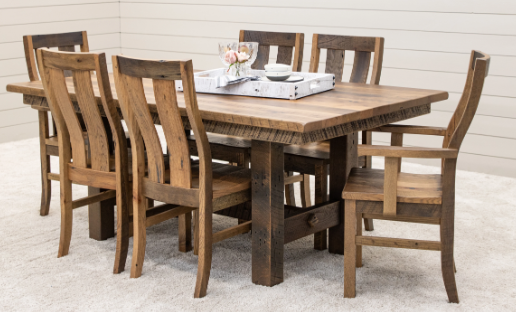
A farmhouse dining table is often the main visual element. Long wooden tables work particularly well because they reinforce the informal and communal character associated with farmhouse interiors.
A pendant light or chandelier above the table can visually define the dining area. This is especially effective when there are no walls separating it from the kitchen or living room.
An area rug can also help create a clear dining zone, although it should be large enough for chairs to remain on the rug when pulled away from the table.
Keep the Color Palette Consistent
Open-concept interiors look more cohesive when the same general color palette continues throughout the space.
This does not mean every wall, cabinet, and piece of furniture should match exactly.
Instead, choose several related colors and repeat them across the kitchen, dining room, and living area.
Warm white, cream, beige, taupe, soft gray, muted green, and natural wood tones are commonly used in farmhouse interiors.
For example, white kitchen cabinets may connect visually with cream walls, while a warm wood dining table coordinates with exposed ceiling beams or living room furniture.
Small black accents can add contrast through light fixtures, hardware, window frames, or furniture legs.
Use Flooring to Connect the Spaces
Consistent flooring is one of the easiest ways to create visual flow in an open floor plan.
Using the same wood or wood-look flooring throughout the kitchen, dining room, and living room makes the entire space feel larger and more unified.
Natural or medium-toned wood is especially suitable for farmhouse interiors because it adds warmth without overwhelming the room.
If different flooring materials are required, try to keep transitions simple.
Area rugs can then be used to define individual zones without interrupting the overall continuity of the floor.
Add Architectural Farmhouse Details
Architectural details can give an open floor plan more character.
Exposed wood beams are particularly effective because they draw attention upward and help visually organize a large ceiling.
Shiplap walls, simple trim, paneled ceilings, brick fireplaces, and wood mantels can also reinforce the farmhouse style.
Use these features selectively. Too many farmhouse details in one open space can make the interior feel overly themed.
A few strong architectural elements usually have more impact than many small decorative features.
Make the Fireplace a Focal Point
A fireplace can provide a natural visual anchor in an open farmhouse living area.
Position sofas and chairs so that the fireplace becomes part of the main seating arrangement. If possible, keep the surrounding wall relatively simple.
A wood mantel, stone surround, brickwork, or painted paneling can add farmhouse character without requiring excessive decoration.
Because open floor plans often lack traditional walls, a fireplace can help give the living area a stronger sense of place.
Improve Natural Light
Large windows are an important part of many open-concept farmhouse interiors.
Natural light makes connected spaces feel brighter and more spacious while also emphasizing wood, stone, and neutral colors.
If the room has attractive outdoor views, arrange furniture so windows remain visible rather than blocking them with tall cabinets or oversized seating.
Glass doors leading to a patio or covered porch can also improve the connection between indoor and outdoor spaces.
Use simple window treatments such as linen curtains, woven shades, or light-colored fabric panels to maintain an airy appearance.
Layer the Lighting
One large ceiling fixture is rarely enough for an open floor plan.
Different zones should have their own lighting while remaining visually coordinated.
Pendant lights can define the kitchen island, a chandelier can highlight the dining table, and floor lamps or table lamps can provide softer lighting in the living area.
Fixtures do not have to match exactly, but they should share similar materials, finishes, or proportions.
Black metal, aged brass, wood, and simple glass fixtures often work well in farmhouse interiors.
Layered lighting also makes the space more flexible throughout the day.
Add Practical Storage
Open layouts can easily appear cluttered because so much of the interior is visible at once.
Built-in storage can help keep the space organized.
Kitchen cabinetry should provide enough room for dishes, appliances, and pantry items. In the living area, built-in shelves or cabinets can store books, electronics, and everyday objects.
A sideboard or buffet in the dining area can add extra storage while also creating a surface for serving food or displaying decorative items.
Woven baskets are another useful farmhouse-style storage solution for blankets, toys, or magazines.
Use Rugs to Separate Functional Zones
Area rugs are an effective way to divide an open room without introducing walls.
Place a large rug beneath the living room seating to define the main conversation area.
A separate rug can be used under the dining table if the space is large enough.
Choose rugs that coordinate rather than compete with each other. Similar colors or textures can help maintain continuity while still giving each zone its own identity.
In smaller open layouts, one large living room rug may be enough.
Avoid Overcrowding the Space
Open-concept farmhouse interiors often work best when the layout remains relatively simple.
Too much furniture can interfere with circulation and make the room feel smaller.
Select pieces that suit the size of the room rather than filling every empty corner.
A large farmhouse dining table, comfortable sofa, coffee table, and several well-placed chairs may provide everything the space needs.
Decorative accessories should also be used with restraint. Ceramics, baskets, artwork, greenery, and textiles can add warmth without covering every available surface.
Blend Modern and Rustic Elements
Farmhouse style does not have to look old-fashioned.
Many contemporary interiors combine traditional farmhouse materials with cleaner modern lines.
For example, rustic ceiling beams can be paired with simple white walls and modern furniture. A traditional wood dining table can sit beneath a streamlined pendant light.
This contrast prevents the open-concept interior from feeling overly themed.
Mixing old and new materials also allows homeowners to personalize the space rather than following one strict design formula.
Create a Comfortable and Connected Home
The strongest Open-Concept Farmhouse Layout Ideas focus on both visual continuity and practical zoning.
A kitchen island can define the cooking area, a dining table and pendant light can establish the eating zone, and carefully arranged sofas can create a comfortable living room without the need for walls.
Consistent flooring, coordinated colors, layered lighting, natural materials, and thoughtful storage help connect these areas into one cohesive interior.
At the same time, rugs, furniture placement, architectural details, and focal points give each part of the room its own identity.
When these elements are balanced carefully, an open-concept farmhouse can feel spacious without feeling empty, rustic without becoming overly decorative, and comfortable enough for everyday family life.