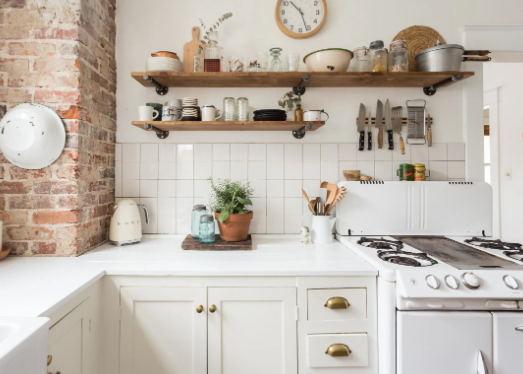
Farmhouse kitchens are cherished for their cozy and inviting atmosphere, often enhanced by the warm, rustic charm of open shelving. This design choice not only adds aesthetic value but also plays a crucial role in organizing your kitchen space efficiently.
1. The Benefits of Open Shelving in a Farmhouse Kitchen
Open shelving is more than just a decorative element; it can drastically improve your kitchen’s functionality. One significant benefit is accessibility. Items stored on open shelves are easily seeable and reachable, which means you can quickly grab what you need without rummaging through cabinets. This ease of access makes cooking and meal prep smoother, especially during busy weekdays.
Additionally, open shelving can create the illusion of a larger space. When you eliminate bulky cabinet doors, the eyes can roam freely, making your kitchen appear more open and airy. This is particularly beneficial in smaller kitchens where space is at a premium. Plus, showcasing your beautiful dishware and cookware can serve as an ongoing celebration of your culinary journey.
-
- Consider which items you use most often for easy access.
-
- Mix open shelving with cabinets for a balanced look and practicality.
-
- Choose a consistent color or material for a cohesive style.
-
- Utilize decorative baskets for a cleaner aesthetic.
2. Best Practices for Organizing Open Shelving
When it comes to organizing your open shelves, grouping similar items can elevate both functionality and style. For instance, stacking your cookbooks or placing your dinner ware in matching sets not only organizes the space but also creates an attractive visual display. This uniformity can be amplified by using colors that complement your kitchen’s overall palette, making it easier to find items when you’re in a rush.
Labeling can also prove to be an invaluable practice. Whether you opt for actual labels or simply use designated spaces for specific categories, knowing where to find things will streamline your cooking process. Moreover, integrating decorative items, such as plants or artisanal jars, can add personality to your shelving without overcrowding it.
-
- Group similar items together (e.g., plates, bowls, and mugs).
-
- Label drawers or containers for easy identification.
-
- Incorporate decorative items for visual interest.
-
- Leave some space empty to avoid clutter.
3. Maintenance Tips to Keep Your Open Shelving Organized
Open shelves can easily become cluttered if maintenance is neglected. A weekly cleaning routine can help keep your shelves looking fresh and organized. Wipe down shelves with a damp cloth, and check for any items that need returning to their proper place. Regularly assessing what items are in the shelves can prevent overcrowding and promote efficient usage of space.
Moreover, make it a habit to consistently return items after use. This small action can greatly reduce the likelihood of clutter. A dedicated spot for every item will make it simpler to maintain your open shelving and ensure that everything has its rightful place, enhancing both efficiency and aesthetics.
-
- Establish a weekly cleaning schedule for your shelves.
-
- Assess item use monthly and declutter as necessary.
-
- Encourage family members to return items to their designated spots.
-
- Keep a small decorative bowl for loose items like utensils or spices.
4. Choosing the Right Shelving Material and Style
The material and style of your open shelves can significantly influence both function and design. Wood is a classic choice for farmhouse kitchens, offering warmth and character. Opting for reclaimed wood can enhance the rustic charm while serving as a sturdy platform for your kitchen essentials. Alternatively, metal shelving provides a contemporary flair and can be easily wiped down if you’re concerned about maintenance.
In terms of style, consider whether you prefer a floating shelf design or traditional brackets. Floating shelves can create a clean, modern look, while brackets offer a more rustic and sturdy aesthetic that fits perfectly into a farmhouse theme. The right choice will not only complement the overall design but also support the weight of the items you plan to display.
-
- Choose shelves that match your kitchen’s color scheme.
-
- Pick sturdy materials that can hold the weight of cookware.
-
- Explore floating vs. bracketed shelving based on your style preference.
-
- Consider measuring the kitchen space to determine shelf size.
In conclusion, open shelving can transform your farmhouse kitchen into a functional and inviting space. By implementing these strategies, you can not only organize your kitchen more effectively but also create a beautiful display that reflects your personal style. Consider starting with a small section of your kitchen and gradually expanding your open shelving to reap the benefits of this charming design choice.