Farmhouse kitchens have gained popularity for their rustic charm and functional design. One of the key elements that contributes to their inviting atmosphere is open shelving. This feature can be a game-changer for rental spaces where making permanent changes isn’t an option. Let’s delve into how you can effectively integrate open shelving in your rental’s farmhouse kitchen.
1. Choosing the Right Open Shelving
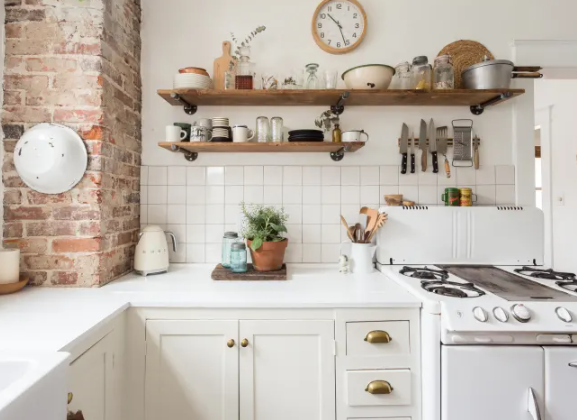
When selecting open shelving, it’s essential to consider both aesthetics and functionality. Materials like reclaimed wood or painted metal fit the farmhouse aesthetic perfectly. Ideally, your shelves should be sturdy enough to hold kitchen essentials like dishes and spices while enhancing the rustic vibe. Remember, as a renter, you want to avoid heavy installations that may damage the walls or be difficult to remove during your lease.
Another factor to consider is the size and layout of your kitchen. If space is limited, opt for floating shelves or ladder-style shelving units that can fit snugly against a wall. You might also consider corner shelves to maximize unused spaces. Measure your available wall area and ensure your chosen shelving fits well without overwhelming the room’s dimensions.
-
- Consider materials that match your kitchen’s decor.
-
- Focus on durability; choose shelves that can hold weight safely.
-
- Measure your available space before purchasing shelving units.
-
- Avoid bulky shelving that can crowd the room.
2. Styling Your Open Shelves
Once your open shelving is in place, the next step is styling them to achieve that beloved farmhouse aesthetic. Start with essential kitchen items like mason jars, pretty dishware, and wooden cutting boards to set the tone. To create a cohesive look, stick to a specific color palette, such as whites, browns, and greens, that reflect the earthy tones typical of farmhouse designs.
Layering is an effective technique for styling open shelves. Place larger items at the back and smaller objects in front to create visual interest. Add some greenery, such as herbs in small pots or faux plants, to liven up the shelves. Mixing textures—such as metal, glass, and wood—will also enhance the rustic feel while keeping the eye engaged.
-
- Use color palettes that reflect a farmhouse aesthetic.
-
- Layer items instead of placing them all at the same level.
-
- Add plants or greenery to breathe life into the shelves.
-
- Mix different materials for a more engaging visual experience.
3. Maintenance Tips for Open Shelving
Maintaining your open shelves is crucial, especially in a kitchen where dust and grease can accumulate. Start by establishing a routine for cleaning; it’s ideal to wipe down your shelves weekly with a damp cloth. Pay attention to where items may drip or spill, as this can attract pests and create unpleasant odors.
Another essential aspect of maintenance is organizing your items regularly. As you use your kitchen, it’s easy for things to get misplaced or become cluttered. Keeping a consistent method of organization—such as grouping similar items together—will not only keep your space tidy but also make it more functional for everyday cooking.
-
- Wipe shelves weekly to prevent dust and grease buildup.
-
- Tidy up regularly to avoid clutter.
-
- Store frequently-used items within easy reach for convenience.
-
- Consider using decorative containers to store small items.
4. Rental-Friendly Installation Options
For renters, installing open shelving can be challenging due to lease restrictions. Luckily, there are several rental-friendly installation options available that won’t damage your walls. Adhesive strips or removable hooks can be utilized for hanging lighter shelves and are easy to remove when it’s time to move out. They offer a practical solution that doesn’t compromise the property.
If you’re looking for a more substantial installation, consider using free-standing shelving units. These require no wall mounting and can easily be moved around or replaced. A stylish baker’s rack or a vintage ladder shelf can provide an eye-catching element while also serving as functional storage.
-
- Use adhesive strips or removable hooks for lightweight shelving.
-
- Opt for freestanding shelves when possible.
-
- Check if wall-mounted shelves can be removed without damage.
-
- Provide added structure with braces if you’re using heavier items.
Incorporating open shelving into a farmhouse kitchen in a rental space is a creative way to enhance style and functionality without making permanent changes. By choosing the right materials, styling thoughtfully, and maintaining regularly, you can enjoy the aesthetic benefits while keeping your landlord happy. Start your journey today, and let the charm of a farmhouse kitchen inspire your culinary adventures!